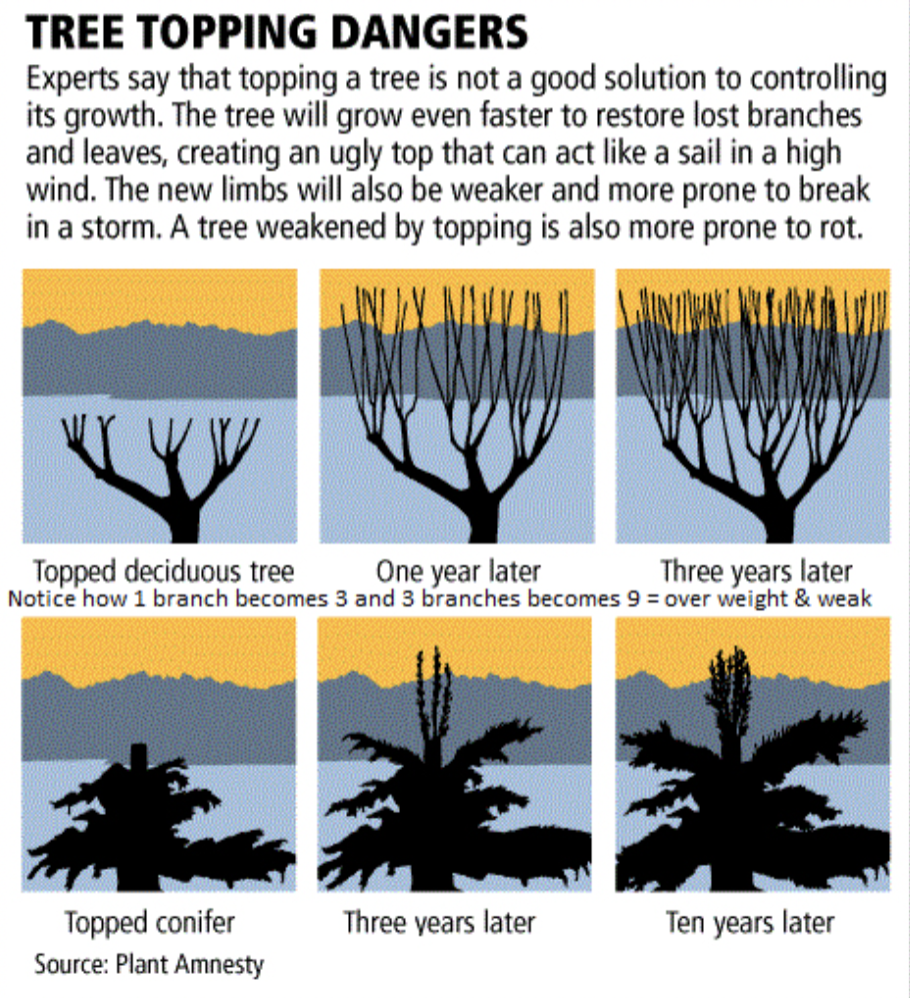
Why Topping a Tree is Unhealthy and Poor Standard Practice
Tree pruning standards are typically determined by professional organizations such as the International Society of Arboriculture (ISA) and the American National Standards Institute (ANSI). These organizations develop guidelines to ensure proper pruning techniques that promote tree health and safety. Local governments and municipalities may also set additional regulations or standards for tree maintenance within their jurisdictions.
 The International Society of Arboriculture (ISA) is a global organization dedicated to promoting the professional practice of arboriculture and fostering a greater appreciation for trees. It provides certification programs, educational resources, and research to support arborists and tree care professionals. The ISA also establishes industry standards and best practices to ensure the health, safety, and sustainability of urban and rural forests.
Top 10 Reasons Why “Topping” a Tree Is Not Recommended
- Weakens Tree Structure: Topping removes large branches, which leads to the growth of weakly attached shoots that are more likely to break and cause damage.
- Increases Risk of Decay: Large, open wounds from topping make trees more vulnerable to disease and decay organisms.
- Reduces Photosynthesis: Removing a significant portion of the canopy limits the tree’s ability to produce energy, stressing the tree.
- Destroys Natural Form: Topping disfigures the tree’s natural shape, leading to an unattractive appearance and loss of aesthetic value.
- Shortens Tree Lifespan: The stress and damage from topping often result in premature decline and death of the tree.
- Encourages Hazardous Growth: New shoots that emerge after topping are fast-growing but poorly attached, increasing the risk of limb failure.
- Increases Maintenance Costs: Topped trees require frequent corrective pruning to manage regrowth and mitigate hazards.
- Reduces Property Value: Damaged or unsightly trees can negatively impact the value and curb appeal of a property.
- May Violate Local Standards: Many municipalities have regulations against topping, and improper practices could result in fines or penalties.
- Negatively Impacts Surrounding Environment: Topping can disrupt wildlife habitats and reduce the overall ecological benefits provided by healthy, well-structured trees.
Recommended alternatives to topping a tree include selective pruning and crown reduction. Selective pruning involves carefully removing specific branches to improve the tree’s structure, health, and appearance without causing significant stress or damage. Crown reduction, on the other hand, reduces the overall size of the tree while preserving its natural form and minimizing large wounds. Consulting a certified arborist is also advised, as they can assess the tree’s needs and recommend the most appropriate pruning methods to maintain safety and vitality.
Call Bailey Tree today to schedule a free Estimate with one of our Certified Arborists.